



There’s a specific kind of person I really hate running into at parties, especially networking events or professional gatherings. They might walk up to you and start to chat, asking you the kinds of polite questions that people do at these sorts of things. “How have you been? How’s work going? Is your boss still acting like a jackass?”
And while the words coming out of their mouth make it sound like they’re interested in talking to you, their eyes are telling a different story. They keep looking just over your shoulder, waiting to see someone a little more important than you. And the worst part is that they’re so damn obvious about it. Everything about them suggests that you simply don’t matter enough to be taking up any of their time.
That’s the feeling I’ve been having this week as I watch Mark Carney’s much ballyhooed “investment summit” unfold. And it’s because so much of what’s being said isn’t about Canada or Canadians, not really. Instead, Carney is looking over our shoulders, and trying to wave past us, so he can talk to the big money investors who he thinks are the ones that really matter. And worse, he’s doing whatever he can to make them happy, even at our expense.
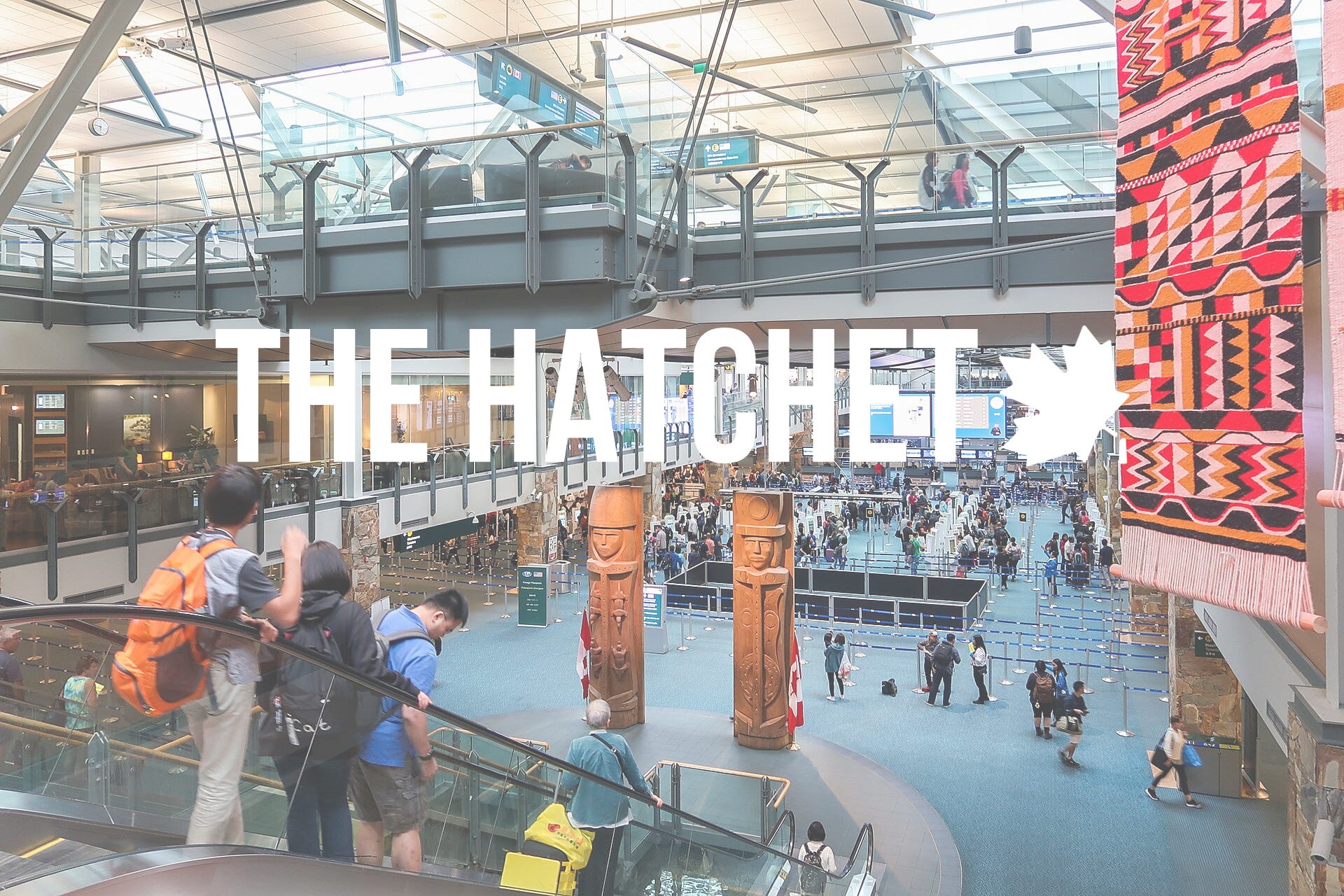
The foremost example of this is the recent announcement that the federal government intends to open up our major airports to private, for-profit investment.
Allowing big, private money to buy up chunks of our airports has been a long-held neo-liberal dream in Canada. Kim Campbell proposed it during her short-lived government, as did Justin Trudeau in 2017.
They were both hoping to follow in the example of Margaret Thatcher’s UK, which became the first western nation to fully privatize their existing major airports back in 1987. Since then, many European countries, as well as Australia and New Zealand, have followed suit, with massive pension funds often purchasing the airports outright or buying up long-term concessions to run them. And that includes Canadian pension funds, like Ontario Teachers, which up until recently, held major stakes in Birmingham, Bristol and London City airports.
But the idea has never really caught on in Canada, for one very good reason — Canadians hate it. A recent Nanos poll found that over 50% of Canadians oppose the plan and with only a little over 30% in favour. And that’s because Canadians clearly have an intuitive understanding that airports aren’t the kind of asset that it makes sense for governments to completely sell-off. They are, after all, natural monopolies, giving them enormous power to charge what they want.
So why does Carney want to do this? Because it’s not about what’s best for Canadians. Instead, this is a proposal that works for the benefit of major asset managers and pension funds. Last year, the Maple Eight (a colloquial term for Canada’s eight largest pension fund managers), were begging the government to privatize publicly owned assets so that they could have a piece of them. These giant pools of money are on a desperate search for increased returns, wherever they can be found. And vital infrastructure is a great place for them to do it. Because they know that they can gouge consumers with no consequences.
Everyone knows that’s how these kinds of deals work. So it’s especially galling that the government still frames this proposal as a way to lower costs for consumers. Nothing could be further from the truth.
After all, these institutional investors aren’t charitable enterprises. If these funds spend billions to buy up our airports, they’re going to want billions back. And there’s two simple ways for them to do so — raise prices or cut services.
And in a country like Canada, airports don’t really even have to compete with other forms of travel. Sure, if you’re visiting Toronto from Montreal, you have the option to take the train. Or if you’re truly brave, the bus. But that’s not realistic if you need to go to Vancouver instead. And if you’re travelling to Yellowknife, it’s impossible.
IFM Investors, a major Australian pension fund, is one of the funds most desperate to buy up some of these airports. Australia privatized their major international airports back in the 1990s, under Prime Minister John Howard’s Thatcherite government.
And so how has the Australian experiment played out?
Back in 2024, Australia’s former competition commissioner, Allan Fels, was tasked by the Australian Council of Trade Union to look into consumer price-gouging across the economy. Airline tickets were one of the many areas that he found everyday Australians were being taken for a ride.
Like Canada, Australia is a very large country served by only a handful of major airlines, and Fels found that the lack of competition led to higher ticket fares. But there was another major problem — airports were also gouging prices.
“Airports, too, as a natural monopoly are enabled to overcharge and their prices are unregulated,” the report stated.
Fels went on to write that “there is also a very strong case for the introduction of price regulation in relation to airports, which hold a very clear monopoly.”
Australia’s four largest airports — Sydney, Melbourne, Brisbane and Perth — are all privatized. And according to the country’s competition commission, airport fees have been increasing significantly above inflation in all of them. In Perth, revenue-per-passenger increased by 59% in inflation-adjusted terms in the decade before 2022.
In addition, the Sydney, Brisbane and Perth airports were all able to make a profit even during the COVID-19 shutdowns, an indication of their monopoly power and their ability to pass off their costs to everyday customers.
The man who actually privatized the airports, former Howard government transportation minister John Sharp, has said that he regrets not placing more aggressive price controls on these airports.
Initially, Australia imposed price-controls that expired after five years of the sale, which Sharp has said was not nearly long enough.
“Because what happened was that after five years the government then lifted the regulated pricing for airports, so that airports were free to do whatever they wanted to do,” he told the ABC News.
“And as a result of that we’ve seen the cost of services provided by airports increase dramatically, which means that airfares are higher as a consequence, because the airlines can’t absorb those increased costs.
“They need to pass them on. And they do.”
The Sydney airport found other creative routes to go after consumers. They increased the price of parking and then shut down a free passenger pick-up area, a blatant misuse of their monopoly power. And one that made life just a little bit worse for everyday Australians who needed to travel.
In New Zealand, it was a similar story. Airport privatization has resulted in hundreds of millions of dollars of increased fee revenue that has gone into the pockets of private consortium.
Here’s the truth — by privatizing our airports, in full or in part, the price of a flight will go up in Canada. The only real uncertainty is how much more consumers will have to pay.
And what for?
This is the question that I haven’t seen answered. No one is making the case for how this will benefit everyday Canadians — not the pension funds nor the prime minister.
Instead, they’re trying to dodge the question. For instance, IFM Investors, that Australian pension fund that is so desperate to buy a piece of our airports, recently released a very suspect survey.
They polled 3,000 Canadians, finding that 79% of people say “additional investment in airports is important or needed.”
Who’s going to say no to “additional investment” in anything? But I bet if I asked Canadians whether they want airports to be partially privatized or if they think airport fees should increase substantially, the results of the survey would be markedly different.
But here’s the most ridiculous part of this whole scheme. Our airports are already privatized. The government doesn’t run YVR or Toronto Pearson or Montreal Trudeau. They are managed by private airport authorities that are run as non-profits. Collectively, they pay hundreds of millions of dollars to the government, and if there’s any leftover revenue, they have to invest it into the airport itself.
So what Carney is actually proposing is turning our airports from non-profits into for-profit enterprises. I don’t see how extracting hundreds of millions of dollars from these airports so that a pension fund can post a slightly higher return is going to benefit air travellers in the long-run.
One interesting note that did come out of the survey is that they found that Canadians were much more willing to trust pension funds than other kinds of owners.
And while I believe that’s true, they frankly shouldn’t be. We would be better served as thinking of these pension funds as massive private equity operators, which is exactly what they are.
Would Canadians be willing to sell off long-term concessions to our airports to private equity? Because that’s exactly what we’re being asked to do.
Pension funds and other institutional investors are often described as “patient capital,” that don’t need to make an immediate return in order to justify their investments. But this comes with a downside — the leases that they demand are in the order of decades. In other words, once they have their claws in something, it’s going to be a very long time before they pull them out.
And once a deal is made, there’s no going back.
Now at the very least, Carney isn’t looking to sell the airports outright, just sell off long-term concessions. But the consequences will be largely the same.
And what I find the most frustrating is the total lack of honesty about everyone’s motivations. They’re acting like Canadians are stupid. That we’re not even worth talking to.
If Carney believes that the federal government’s deficits are so bad that we need to sell off the rights to our own infrastructure, then he needs to tell Canadians that. Because that’s the only reasonable justification I could even imagine for such a harebrained proposal.
But he isn’t doing that. Instead, he’s talking over our shoulders to the men wearing Savile Row suits and Patek Philippe watches, acting like our opinion doesn’t even matter.
The least he can do is look us in the eyes and tell us the truth.


