



If you work in the media long enough, you’ll start to notice the cycles.
Bit by bit, the press will start to take an issue more seriously. They’ll devote more reporters to that specific beat, opinion writers will focus their ire on it, stories on that topic will be more likely to lead off an evening broadcast.
And then, the tide will recede. And not only are you back to where you started, but the media will be talking about how “things have gone too far” and “common sense must prevail.”
There’s no better example of this phenomenon than how we talk about policing. I’m sure all of you can remember it well — in the mid-2010s, the media began to scrutinize police forces all across the country, spurred on by activist movements like Black Lives Matter. And it all peaked in 2020, in the aftermath of the killing of George Floyd in Minneapolis.
But then came the backlash. Increasingly, crime became the overriding concern and media critiques of the police were no longer in vogue.
This isn’t even the first time we’ve been through this cycle. If you go back through Canadian history, it happens over and over and over again. In the 1970s, Canadians were outraged by police abuses. And in the 80s, law and order was back in fashion. In the 90s, there were uprisings in Toronto and Montreal against the cops. And then came the Summer of the Gun. And so on and so on.
But this doesn’t help anyone. Today, police power and police misconduct appears to be growing. Toronto is amidst the worst policing crisis in its history. And while the details of that were still coming out, three off-duty Toronto police officers were charged with sexual assault in Spain.
In British Columbia, the Vancouver police has been interfering in the city’s politics, while the RCMP spies on protesters and dissidents.
Murder trials in Calgary and Fredericton have fallen apart because of police incompetence. And in Edmonton and St. John, the police chiefs have been accused of serious misconduct.
And then there’s Montreal. Last year, two unarmed people were killed by Montreal-area police forces, including including one of a fifteen-year-old boy.
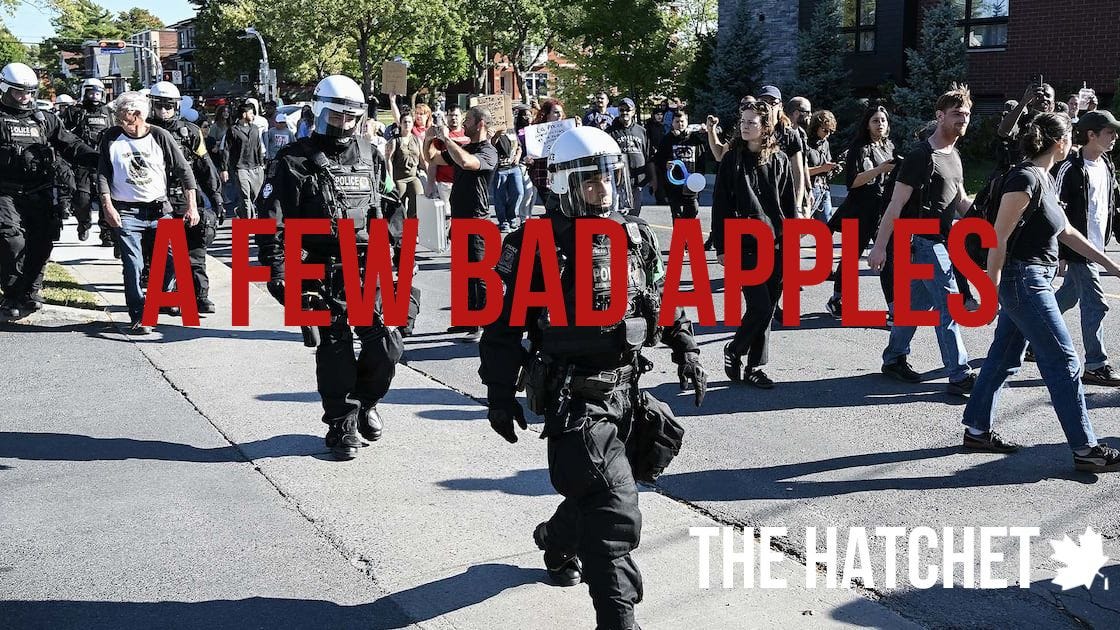
This is why we’re launching a new, ongoing series from The Hatchet called “A Few Bad Apples.” It will be both a podcast and a newsletter. The purpose is to maintain a consistent eye on what’s happening in the world of Canadian policing, in every corner of the country, and not just follow the media trends.
This is only made possible by our supporters, so if you haven’t already, please go to hatchetmedia.substack.com and become a supporter today.
And for our first story, we’re going to the South Shore of Montreal, where one of the most horrific stories you can imagine is still unfolding — the killing of Nooran Rezayi, an unarmed child, by the Longueuil police. And the blatant attempt to cover it up.


