



This episode contains substantial discussions of, and some descriptions of, sexual violence, and so it may not be appropriate for all listeners.
For the last few years, it’s become almost a cliché to talk about how we’re in the middle of a new era of accountability when it comes to sexual violence.
Whether it’s the prosecution of Harvey Weinstein or the ongoing revelations from the Epstein Files, the rich, famous and powerful appear to be having their crimes exposed and, on occasion, even punished.
Here in Canada it’s been no different. There have been numerous media exposes on the prevalence of sexual violence in arenas as varied as media, sports, business, politics, the service industry and so many others.
But when it comes to actually prosecuting these alleged crimes in the legal system, Canada’s track record has been much more mixed.
The Jian Ghomeshi trial, which kicked off Canada’s #MeToo movement years before The New York Times expose on Harvey Weinstein, ended with an acquittal.
On the other hand, billionaire fashion mogul Peter Nygard is now serving eleven years in prison for sexually assaulting four women in Toronto at the height of his fame and power.
Quebec technology billionaire Robert Miller was arrested and faced two dozens charged, including sexually assaulting minors. But last year he was found unfit to face trial due to advanced Parkinson’s disease.
And last year’s Hockey Canada trial, maybe the most high-profile case of them all, ended without any guilty verdicts.
If there’s one takeaway that I have from all of these trials and the way that they’ve been covered, it’s this — each trial comes to represent the whole in the public’s mind. Each individual case became a litmus test on whether or not #MeToo has gone too far or not far enough.
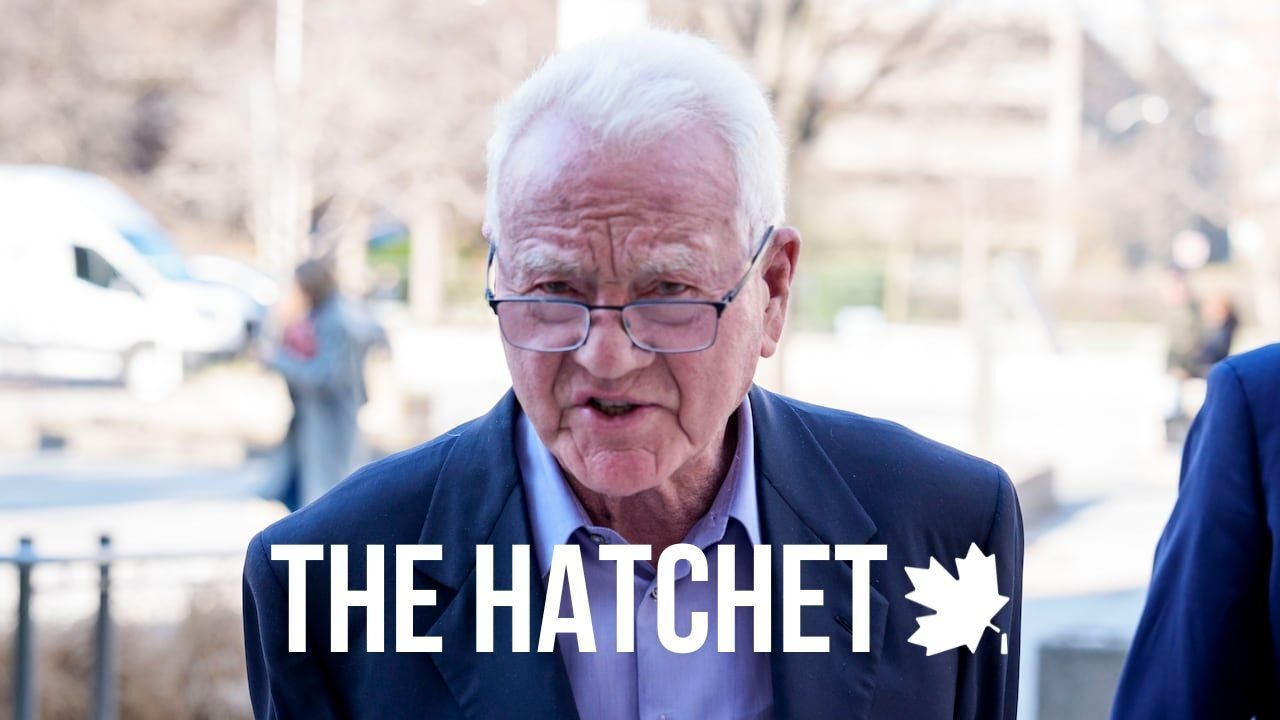
And the trial of Frank Stronach has been no different.
Stronach is one of the most recognizable and influential billionaires in Canadian history. The founder of Magna International, an auto parts manufacturer, he has long been considered to be a leading light of Canadian industry. And he never shied away from the spotlight, making himself a near-constant public figure in the worlds of thoroughbred horse-racing and politics, both in Canada and in his birth country of Austria.
But two years ago, he was arrested and eventually charged with eighteen alleged sexual crimes involving thirteen women, from a period that spanned from 1977 to 2024. And when the stories first broke, it was hard not to see just how remarkably similar most of the accounts from the alleged victims were. From the outside, it seemed like these charges would lead to a successful prosecution and significant jail time.
But today, that no longer appears nearly as certain.
Stronach is facing two separate trials, the first of which wrapped up in April.
And that trial has been an unmitigated disaster for the Crown.
During the course of the trial, it was revealed that the police hadn’t even tried to verify whether or not Frank Stronach was in the country for one of the alleged assaults. Prosecutors were upbraided by the judge for allowing an accuser to knowingly lie on the stand. And the Crown was forced to drop charges related to three of the seven accusers, putting into question the entire course of the prosecution.
The judge is expected to deliver her verdict as early as this week.
So what happened here? And is any of this indicative of a broader trend or a larger point?
Stronach’s defence team certainly thinks so. Here’s what defence lawyer Leora Shemesh said in her closing arguments.
“I say with the greatest respect that the pendulum has swung so far the other way that we’ve really lost our ability to balance and respect our constitutional norms. This “Believe all Women” and the “#MeToo” movement and political platforms of not challenging women or testing their complaints really have no place in our criminal justice system.”
So is she right? Is this a case of #MeToo gone too far?
I’m not so sure. Part of me suspects that if this trial is indicative of anything, it’s about broader failures of police and prosecutors to take their jobs as seriously as they should. That it might be part of a pattern of procedural laziness that has doomed so many other high-profile cases in Canada.
Here to talk about it all is Joseph Brean, a reporter for The National Post, who has been covering the trial from inside the court room.
We go in-depth about what actually happened during the trial, whether or not it represents broader failures in the justice system and if criminal trials can ever bring justice for historical sexual assaults.


