


Welcome to the first edition of The Chopping Block. This is a space where we’ll be providing some commentary on the news of the day. We’re still figuring out the format, but I wanted to have a place where we could be a little looser. And of course, this is going to be in addition to our podcast and our more polished columns and features.
The Chopping Block will eventually be only available to paid subscribers, so we hope you’ll consider supporting our work. It’s only $11 a month, and we won’t be able to continue doing what we do without your help.
But for now, we’re leaving it open for everyone. We hope you enjoy, and if you have any feedback on the types of coverage you’d like to see, please reach out!
Cabinet Fever
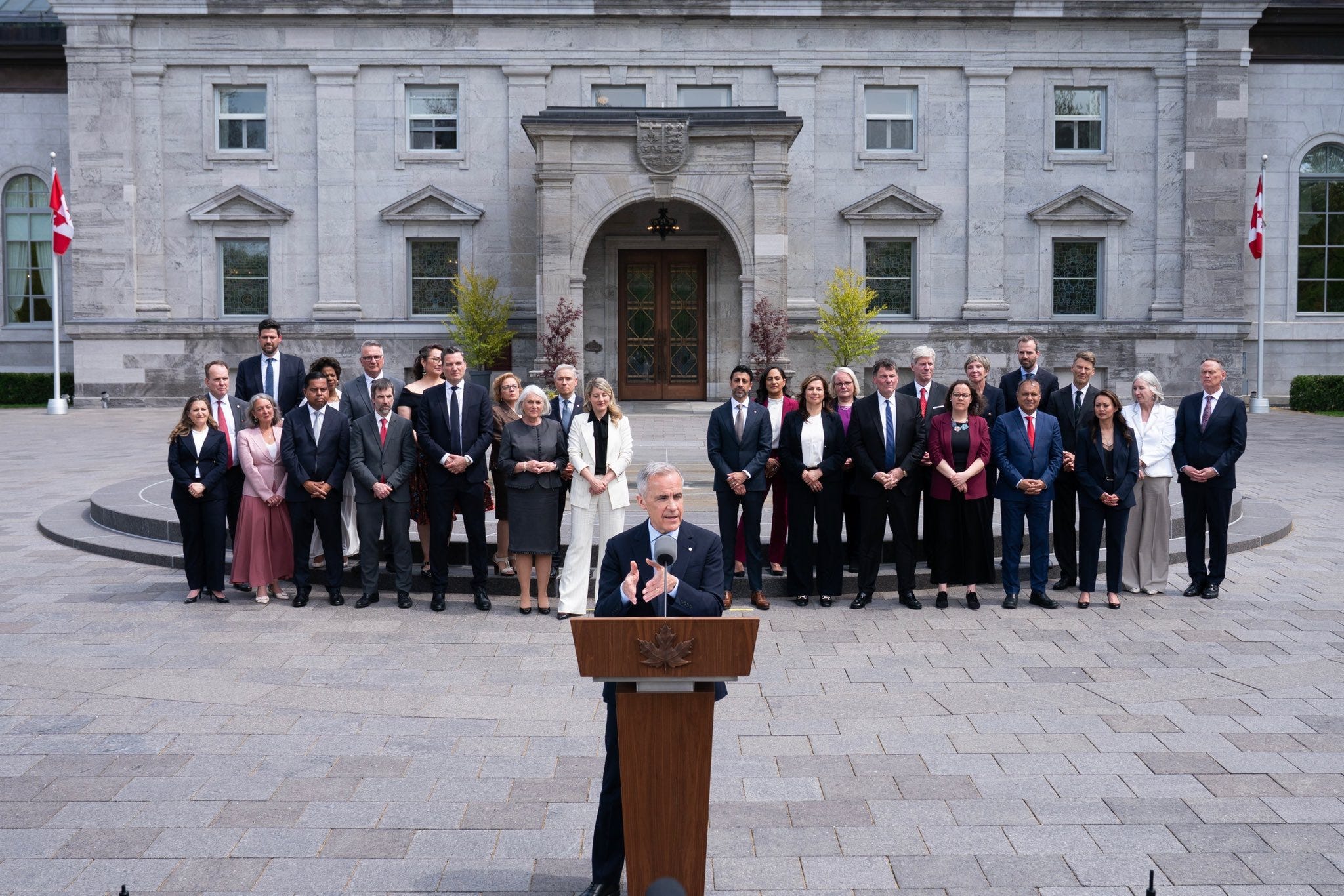
Since he arrived on the national scene, Mark Carney has stressed time and time again that he isn’t Justin Trudeau. He has a different résumé, a different skill set and a different vision for the country.
And all the chatter before his cabinet announcement emphasized just how different this one would be from the last decade. New faces! Smaller! Hierarchical!
All of that seemed incredibly reasonable — and for Carney, it appeared doable. He doesn’t owe anyone in the Liberal caucus anything. His utter domination in the leadership race meant there wasn’t a rival he had to appease. He’s an outsider who stepped into the fray and saved the party from almost certain decimation. In other words, they owe him their damn jobs.
And so that’s why I find these cabinet appointments so confusing. Does some Liberal powerbroker have compromising photos of the prime minister? Because that’s the only way I can explain the vast gulf between his rhetoric and the people he’s deciding to place in power.
Carney has been telling Canadians about the need for transformational economic change. (In fact, I wrote 3,000 words talking about just how difficult it would be for him to pull off that kind of fundamental reorientation of the economy.)
And so I was despondent seeing that Mélanie Joly will be the new industry minister. As we’ve talked about numerous times in The Hatchet, a successful industrial policy is incredibly difficult to craft. Under the previous Trudeau governments, running Innovation, Science and Economic Development Canada (the department the industry minister oversees) was a great way to generate positive headlines, while getting very little of import done. (Anyone remember Navdeep Bains’s superclusters? Surely we’re right around the corner from the Ocean Supercluster revitalising the Maritime economy?)
Joly in many ways embodies the worst aspects of the Trudeau years — government-by-press-release, style over substance. Here’s what Justin Ling had to say about her in a column he wrote late last year, asking for her to be fired from her position as foreign minister:
There is a simple fact about our foreign minister: She’s not cut out for the job. She has garnered poor reviews for her public appearances, and even worse reports for her closed-door meetings. Canada, rather than being “back” as the prime minister once claimed, has become irrelevant on the world stage.
Civil society is growing increasingly frustrated with Ottawa’s rhetoric-laden approach. When one NGO representative met with Joly, they begged her to appoint an ambassador to a particular hotspot on the continent. Joly demurred, they told me, worrying that appointing an ambassador may appear “colonialist.” It is a damning illustration of how political perception has come to be more important than actually acting.
Joly has performed better in the role since the emergence of the American threat. But she’s been the foreign minister for nearly four years. She got plenty of headlines, but you’d be hard-pressed to find many people who’d argue that Canada actually had anything close to a true foreign policy strategy during that time.
Industry is where you need someone with talent, energy and a different approach — especially because the cornerstones of the Trudeau government’s industrial strategy already seem to be falling apart.
Honda just announced that it would be delaying its $15 billion investment into building Canadian electric vehicles and EV batteries by two years. The Canadian government is shelling out $5 billion in subsidies just to Honda and billions upon billions more to other carmakers in similar deals.
Maybe Joly will be able to prove me wrong. But in the wrong hands, the industry portfolio is the perfect place for a politician who wants to generate reams of positive press coverage and make corporate connections, at the expense of billions of dollars from Canada’s treasury ending up on the balance sheets of large multinationals.
But Joly isn’t even the most egregious appointment in this new Carney cabinet.
That dubious honour belongs to former Vancouver mayor Gregor Robertson, who has been appointed the housing minister. Which is an absolutely insane sentence that I never thought I would write.
I can only think of one other politician in this country that has less credibility on housing affordability than Robertson. (I guess Rich Coleman was too busy?) For those of you who aren’t close followers of Vancouver politics, Robertson is best known for presiding over an absolutely outrageous increase in housing costs in the city. By the time his mayoralty was coming to a close, he was so unpopular that his party, Vision Vancouver, was utterly wiped out. They didn’t even run a candidate for mayor. And since then, they haven’t elected a single city councillor.
Robertson is the utter embodiment of what a failed housing strategy can look like.
He managed to piss off everyone. As the extent of the influence of money laundering on housing prices was becoming clear, Robertson decried the supposedly “racist tone” of the research that helped expose that fact. His close connections with Vancouver’s powerful developers, who were primarily focused on building condos for the wealthiest Vancouverites, instilled deep suspicion among affordable housing advocates. And the supply-siders hated him for doing little to change the widespread zoning and regulatory issues that tied up many building projects into knots.
Now, he wasn’t wholly responsible for the unmitigated disaster that is the Vancouver housing market. But he certainly deserves a significant share of the blame. And sure, there’s some nostalgia for Robertson’s time as mayor. But that has more to do with the ineptitude of the men who followed him than with an actual reappraisal of Robertson’s record.
Because he’s run a major city like Vancouver, I thought that Robertson might actually make for a decent cabinet minister — in any portfolio other than housing.
And Robertson is already causing trouble for the prime minister. When asked about his appointment, Carney said that “you would be very hard-pressed” to make the conclusion that Robertson’s appointment means that his government doesn’t think that housing prices should go down.
And then, the very next day, we have Gregor Robertson, the newly sworn-in housing minister, telling the press that indeed, housing prices don’t need to go down.
“No, I think that we need to deliver more supply, make sure the market is stable, it’s a huge part of our economy. We need to be delivering more affordable housing.”
And as CBC News reporter Justin McElroy notes, Robertson has consistently refused to take any responsibility for his role in the city’s housing crisis.
This doesn’t bode well.
Now, there are some decent appointments in this cabinet as well. Anita Anand — who is probably the most competent of the Trudeau-era ministers — has landed at foreign affairs, which doesn’t upset me. Though I was hoping that she might get one of the economic portfolios that are going to be so crucial during the next few years.
Bill Blair is entirely out of cabinet. Now, he had some fans as minister of defence, but I’ve never believed that the man who was responsible for one of the largest violations of civil rights in Canadian history had any business being in government, let alone in cabinet. Good riddance.
Champagne, McGuinty and LeBlanc all landed in places that make sense for them. But why the hell is Sean Fraser back? Housing and immigration were two of the worst-run ministries in the Trudeau years, and somehow Fraser is being rewarded for his failures? The fact that Fraser got a post, but Marc Miller, who performed significantly better than his predecessor as immigration minister, is stuck in the backbenches, is worrying.
And don’t even get me started on our new AI minister, Evan Solomon. First off, we’re dedicating an entire ministry to artificial intelligence? And while experienced politicians like Carlos Leitão — a former Quebec finance minister and Bank of Canada director — were excluded from cabinet, Carney’s personal friend gets a seemingly made-up portfolio?
Judgement and leadership were the two qualities that Canadians were looking for when they elected Carney. And at least when it comes to these cabinet appointments, I see little of either.
For Whom the Bell Tolls
Bell Canada is not doing so well. The company was forced to cut its annual dividend by more than half — a sign of its recent financial struggles. Under CEO Mirko Bibic, who has led the largest of the telcos for the last five years, Bell has piled on debt and made numerous bad bets.
In fact, the whole telecom industry has been floundering over the last three years, driven in no small measure by cuts to immigration, which the Big Three had been relying on to boost subscriber growth.
So are they lowering prices and competing with each other to get new subscribers? Of course not! Prices for everyday consumers keep going up (although Freedom Mobile, now owned by Quebecor, continues to put some price pressure on the oligopoly).
And now Bell is cancelling a contract with the Nunatsiavut Government to build out internet and cell service infrastructure in northern Labrador — despite the fact that they’ve already received millions of dollars in government subsidies for the project.
The costs are just too much, and now they’re pivoting to expanding into the United States instead.
If you look back at Canadian history, it’s during times of heightened economic tensions that Canada’s monopolists are able to most effectively argue that their size is needed to compete with American firms. But Bell’s cancellation of this project is just a reminder that these companies are not instruments of Canadian government policy. They are independent companies answerable to their shareholders. And they will throw governments and everyday people under the bus if there’s money to be made.
Competition has not been high on Carney’s agenda so far. And if Canadian history is any guide, Canada’s oligopolists will use the tension with the United States to extract further concessions from governments and consolidate their power.
That’ll be bad news for everyone. Just ask the residents of northern Labrador what they think about it.
Thank you for leaving the worst to last as I sit in my doctor's office hoping they can figger out why I nearly stopped breathing last night. I nearly gave up my Tuesday morning to scream at my radio after hearing Evan Fecking Solomon was a freshly minted Toronto MP. Then Sandy & Nora pushed their cabinet revue to the end of their show and I waited on the edge of my seat for them to express their incredulity that Solomon made cabinet. And now the awful yet entirely appropriate truth: ministry of AI. Was failing up ever more ironic? Lucky for me that my esophageal spasm can be controlled with a couple tabs as needed and moderation of citrus/coffee/chocolate/booze. I hope Evan can be controlled as easily.
Love the new format for Chopping Block!